
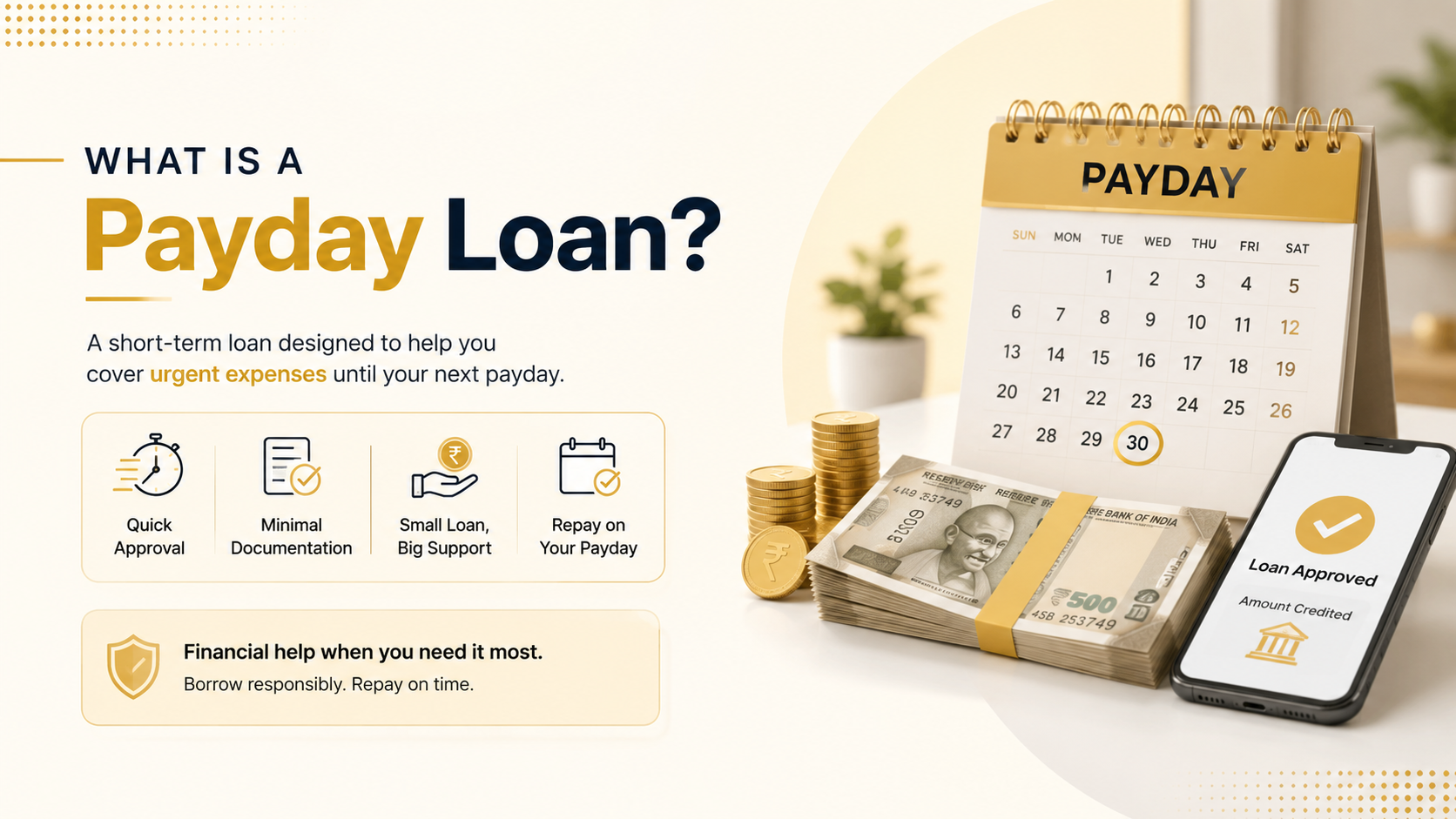
A payday loan usually enters the picture when the month has not gone as planned. Salary is a few days away, but the rent reminder has already arrived. A parent needs a test at the clinic. The bike refuses to start on a Monday morning. The amount may not be huge, but the timing is awkward.
That timing gap is the real reason payday loans exist. They are not meant to make a person richer, and they are not a substitute for savings. They are short-term credit products designed to help with an urgent cash shortage until the next salary or expected income comes in.
What is a Payday Loan?
A payday loan is a small, short-tenure loan that is usually repaid on or soon after your salary date. In India, salaried borrowers often consider it for expenses such as medical bills, school fees, electricity dues, rent shortfalls, urgent travel, or vehicle repairs. The loan amount is generally lower than a regular personal loan, and the repayment period is shorter.
The cleanest way to understand it is this: a payday loan brings a small part of your future income into the present. That can be useful, but only if the future income is actually available for repayment.
A payday loan should behave like a bridge. If it starts looking like a second salary, something is wrong with the budget.
How does it work?
The process normally begins with a digital application. You share KYC details, employment information, salary proof, bank details, and the amount you need. The lender checks eligibility, income stability, repayment capacity, and sometimes your credit history or bank statement patterns.
If the application is approved, the lender shows the offer: loan amount, charges, interest, due date, repayment amount, and other terms. This screen deserves time. Many borrowers make the mistake of looking only at the amount credited to the bank. The more useful number is the amount that will leave your account on repayment day.
A practical example
Say your salary comes on the 30th. On the 22nd, your child's school asks for a fee payment of Rs. 9,000. You can repay after salary, and the rest of your month's expenses are already covered. In that case, a short-term loan may help you handle the timing mismatch. But if your next salary is already committed to rent, groceries, EMIs, fuel, and family support, repayment may become difficult.
Who should consider it?
A payday loan may suit someone with a genuine one-time shortage and a predictable salary date. It may help when a delay will cost more than the loan itself, such as a medical requirement, rent penalty, urgent repair, or school deadline.
It is not a good fit for regular lifestyle spending. If you need one every month for food, rent, or bills, the issue is deeper than a temporary cash gap. Repeated borrowing usually points to a mismatch between income and expenses.
Advantages
Speed is the main benefit. A payday loan can be faster than many traditional credit products, especially when the application and documents are handled online. The smaller loan size can also be useful. Borrowing Rs. 7,000 for a repair is very different from taking a much larger loan because that is all a lender offers.
- Useful for short-term emergencies.
- Often available in smaller amounts.
- Digital application can save time.
- Repayment can be aligned with salary day.
Things to consider before applying
Ask three questions before applying. Why do I need this money? How much will I repay? What will be left after repayment? If the answers are not clear, pause. A loan taken in a hurry often feels heavier later.
Also leave room for real life. Salaries can be delayed by a weekend or bank holiday. A festival month can bring extra family expenses. A medicine bill may continue for a few more days than expected. Borrow only after keeping these small uncertainties in mind.
Common misconceptions
Some people think payday loans are only for careless borrowers. That is not fair. Even disciplined families face medical emergencies, salary delays, or repairs that cannot wait. The problem is not occasional borrowing. The problem is borrowing without a repayment plan.
Another misconception is that small loans are harmless. Small repayments can still disturb a tight budget. Five small obligations can feel larger than one planned EMI.
Responsible borrowing tips
Borrow the exact amount you need, not the highest amount shown on the screen. Keep a copy of the loan terms. Set a repayment reminder two days before the due date. If you expect a problem, contact support early instead of waiting for missed-payment calls.
- Use it for urgent needs, not impulse purchases.
- Check the total repayment amount.
- Make sure repayment fits after rent, food, travel, and existing EMIs.
- Avoid taking a fresh loan just to repay the previous one.
Frequently Asked Questions
Is approval guaranteed?
No. Approval depends on income, KYC, repayment capacity, lender policy, and checks.
Can it affect my credit score?
Yes, depending on reporting practices and repayment behaviour. Late payments can hurt future borrowing.
How much should I borrow?
Only the amount needed for the immediate problem, and only if repayment is realistic.
Summary
A payday loan can help when the need is urgent, the amount is small, and salary is expected soon. It becomes risky when used repeatedly or casually. Treat it as a short-term tool, read the terms carefully, and protect next month's budget before accepting any offer.