
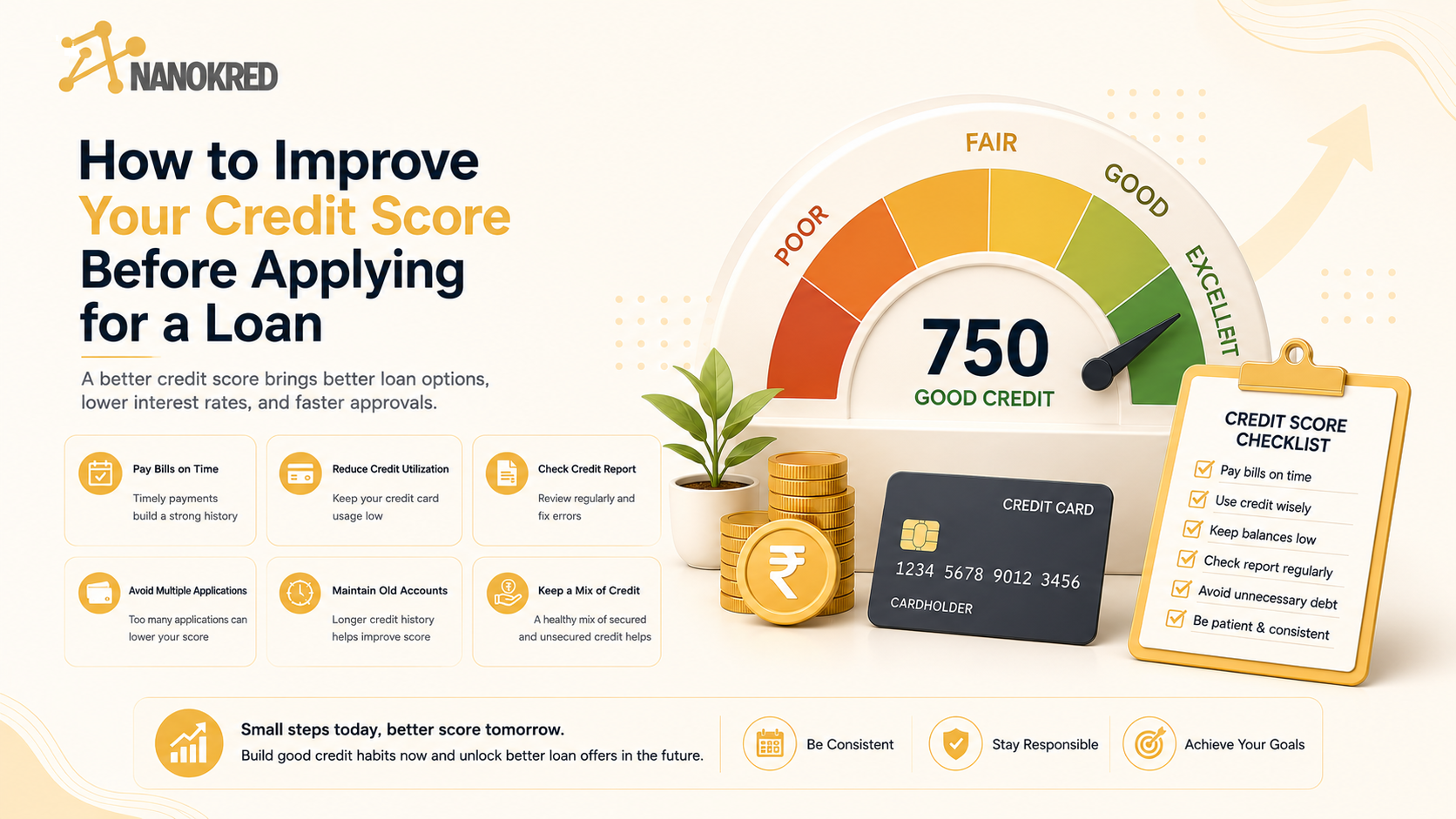
A good credit score does not appear overnight. It is built quietly through ordinary behaviour: paying EMIs on time, keeping credit card balances under control, checking your report, and not applying everywhere in panic. Before applying for any loan, those habits can make a visible difference.
Many borrowers check their score only after a rejection. That is late. A better approach is to look at your credit profile a few weeks or months before you need money. If a wedding expense, house deposit, education payment, or medical procedure is likely, start early. Credit improvement rewards preparation.
Know where your score stands
Start by checking your credit report from a recognised bureau. Do not stop at the three-digit score. Read the accounts listed, repayment history, enquiries, credit limits, settled accounts, overdue amounts, and personal details. A score is only the headline; the report tells the story.
If your score is low because of a recent missed EMI, the repair plan is different from someone whose score is low because of high credit card usage. If your report has an old loan showing as active even after closure, you need correction, not guesswork.
Credit score improvement begins with diagnosis. Without reading the report, most advice becomes guesswork.
Pay every due amount on time
Payment history is usually the most sensitive part of a credit profile. A missed EMI, delayed credit card payment, or overdue loan can stay visible for a long time. If you are planning to apply for a loan soon, clean up overdue amounts first.
Set reminders two or three days before due dates. Keep EMI money separate on salary day. If salary is delayed, call the lender early instead of waiting for the due date to pass. One honest call may not erase the problem, but it is better than silence.
Reduce credit card utilisation
If you use a credit card, keep the outstanding balance low compared with the total limit. A card with a Rs. 50,000 limit and Rs. 48,000 outstanding can make you look stretched, even if you pay the minimum amount.
Try to reduce balances before applying for a loan. If possible, pay more than the minimum due. Minimum payments keep the account active, but they do not quickly reduce pressure. Avoid using the card for avoidable spending while preparing for a loan application.
Fix report errors early
Credit reports can have mistakes: wrong mobile number, old address, duplicate loan entry, closed loan still shown as active, or repayment incorrectly marked late. Raise disputes with the bureau or lender as soon as you find them. Corrections can take time, so do not wait until the day you need funds.
Keep loan closure letters, payment screenshots, and bank debit proof. These documents help when you have to prove that an account was paid or closed.
Avoid too many applications
Applying to multiple lenders in a short period can create several hard enquiries. That may signal desperation to some lenders. Compare options first, check eligibility where possible, and apply only where the product genuinely fits.
This is especially relevant when rent, school fees, or medical bills create pressure. Panic applications rarely improve approval chances. They only leave a trail.
Common credit score myths
Closing every credit card does not automatically improve your score. Taking a loan only to create history is not always smart. Paying the minimum due is not the same as being debt-free. And checking your own score does not damage it when done through proper channels.
Habits that slowly improve credit
Keep old healthy accounts open if they do not cost you money. Maintain low utilisation. Pay EMIs on time. Avoid unnecessary credit. Review your report every few months. These steps are not dramatic, but they work because lenders prefer consistency.
- Clear overdue amounts first.
- Pay credit card dues before the due date.
- Keep utilisation low.
- Dispute report errors quickly.
- Apply only after checking affordability.
Frequently Asked Questions
How quickly can my credit score improve?
Small improvements may appear in a few reporting cycles, but serious repair can take months. It depends on the reason for the low score.
Does checking my own score reduce it?
No, checking your own report is usually treated as a soft enquiry.
Should I close old loans before applying?
Close overdue or expensive obligations if possible, but do not close accounts blindly without understanding the impact.
Summary
Improving your credit score is mostly about discipline before urgency. Check your report, pay on time, reduce card balances, fix errors, and avoid unnecessary applications. A stronger credit profile can make borrowing smoother when a genuine need appears.